
Flacso System
The Latin American Faculty of Social Sciences (Flacso) is an international, autonomous, and intergovernmental organization founded in 1957 by Latin American states that adopted a recommendation from the 9th General Conference of the United Nations Educational, Scientific and Cultural Organization (UNESCO).
Currently, it comprises 18 member states that carry out academic activities, research, and cooperation initiatives in 13 countries across Latin America and the Caribbean. All of these units make up the Flacso System.
Its governance structure includes:
General Assembly (of Member States) that sets the Institution’s general policy.
Superior Council (composed of diplomatic representatives from the member states that host academic institutions), which acts as a liaison between the General Assembly and the organization’s day-to-day management.
Steering Committee – composed of the deans of academic units (elected by the Assembly), the Secretary General, and a faculty representative – which is responsible for planning and carrying out the College’s activities.
In addition to the director, each Academic Unit is managed by an Academic Council—composed of the program coordinators, a representative of the faculty and researchers, and a student representative—which is responsible for proposing and evaluating institutional activities.
The Secretary General (currently based in Costa Rica) serves as the Secretary for the Assembly, the Superior Council, and the Executive Committee.
Member States: Argentina, Bolivia, Brazil, Chile, Costa Rica, Cuba, El Salvador, Ecuador, Guatemala, Honduras, Mexico, Nicaragua, Panama, Paraguay, Peru, the Dominican Republic, Suriname, and Uruguay.
Academic units
Campuses: Argentina, Brazil, Chile, Costa Rica, Ecuador, Guatemala, and Mexico.
Programs: Cuba, El Salvador, Honduras, Paraguay, the Dominican Republic, and Uruguay.

Flacso in Brazil
Based in Brasília, Flacso Brazil develops research, training, and cooperation activities in the areas of education, human rights, health, youth, violence, inequalities, social participation, culture, ethnic-racial diversity, among others.
Flacso and the Government of the Federative Republic of Brazil signed an agreement in December 1990 for the operation of the Academic Headquarters in the country. In May 1992, the National Congress approved this agreement through a Legislative Decree, which was promulgated in June of the same year by Decree No. 593, signed by the President of the Republic and the Chancellor of the Federative Republic of Brazil.

The agreement between the entity and the government provides for the execution of “postgraduate teaching activities, research and other forms of cooperation in the field of economic and social development and the integration of Latin America and the Caribbean” (article II).
Regulations
Flacso Brazil is governed by local regulations and the Flacso System, which aim for excellence in its activities, whether academic, cooperative, or outreach-related.
Founding documents:
- Agreement on Flacso
- Flacso Brazil Agreement
- Regulation of Flacso System Teaching Programs
- Flacso System Student Regulations
- General Regulations for Postgraduate Courses and Training Activities with Curricular Value at FLACSO Brazil
- Flacso System Code of Ethics
- Code of Ethics for Research of the Flacso System
- Policy for the protection of children, adolescents and adults in vulnerable situations.
- Issuance of diplomas, certificates, and transcripts.
Research areas
Intercultural studies; studies on ethnicity, discourse, and identities; anthropological studies; social anthropology; visual anthropology; indigenous languages and cultures; art history; cultural studies; shifts in collective imaginaries; cultural management; racism; linguistics; ethnographic studies; decolonial critical theories.
Social movements; processes of collective action; movements: student, women’s and feminist, sexual diversity, territorial defense, and indigenous peoples; labor studies, civil society; the labor movement and industrial organization; social memory.
Vulnerable populations (the poor, people with disabilities, boys, girls, and adolescents, people of African descent, women, and the LGBTI+ community) and marginalized groups; development and conflict; studies on inequality, poverty, and social exclusion; child labor; population or demographic studies; intersectionality.
Models of capital accumulation; industrialization; agricultural and livestock production; foreign debt and capital flight; economic and social development issues; socioeconomic dynamics; labor, employment, labor market, and informal economy policies; entrepreneurship; social and solidarity economy; small and medium-sized enterprises; feminist economics; cooperativism; the influence of commodities on economic growth; real estate market; public finance, cooperativism.
The relationship between education, economic growth, and development; policies and processes related to equity and quality at various levels of education; the relationship between social environments and schools; best teaching practices; school dropout and academic delay; teacher performance evaluation; school violence; higher education; pedagogical strategies; teacher training; teaching methods and educational literature; critical pedagogies; educational policies.
Territorial development and management; agrarian conflicts; local capacity building and development based on decentralization processes and governance at different levels of government; risk management; gender-sensitive disaster risk management; tourism management; population and territory; sustainable development; energy; climate change; food security and sovereignty; agricultural studies; smallholder family farming; forest management; socio-environmental conflicts; solid waste management; urban studies; public policies on energy and the environment.
International, regional, and multilateral systems and organizations; geopolitics; foreign policy; world trade and regional integration; trade policy; political integration; globalization; contemporary political processes; development cooperation.
Political representation; political sociology; political processes and the quality of democracy; citizen participation; political parties; electoral processes; rule of law; nation and nationalism; ethics; bioethics; institutional and regulatory reforms; accountability; corruption; theory of democracy; prior consultation on indigenous issues; intellectual property; political culture; use of public funds; trade unionism; corruption and impunity; churches and neo-Pentecostal movements.
State; public policy; social management and public policy; public policy management; public management and administration; privatization and regulation of public services; public policy analysis; public policy and social programs; decision-making and evaluation of public policies and government programs; inclusion of indigenous peoples and African Americans in public policy; youth public policy; gender equality public policy; urban policy; participatory budgeting; analysis of wage disparities; physical and mental health policies.
National security; armed conflicts; international security and defense; human trafficking; drug trafficking; national police; human protection; public safety; local security management; intelligence systems; disarmament; security and citizenship; the impact of gangs and criminal organizations; studies on youth violence; social violence; armed violence; prison systems; cybersecurity; legal and institutional frameworks related to security; public safety and gender.
Studies on human rights; law and public goods; political action and rights; political behavior of individuals and groups; justice and politics; reparations for victims; specific rights of: children, women, indigenous peoples, the LGBTQ+ community; adolescents; people of African descent; people with disabilities; socioeconomic status; international and regional frameworks for the protection of human rights.
Sexual and gender-based violence; gender-sensitive legislation and institutional frameworks; participation and leadership; labor inequality; empowerment; abortion; the LGBTQ+ community; domestic violence; femicide; heteronormativity; machismo; patriarchy; new masculinities; sexual and reproductive rights; comprehensive sexuality education; feminist movement; feminist epistemology; decoloniality and intersectionality; equality policies; care policies; feminist economics.
People in situations of refuge, repatriation; political asylum; forced displacement or migration; monitoring of international migration; mapping of international migration routes; the role of international organizations in international migration; migration policies; internal, cross-border, and interregional migration; women, gender, and migration.
Science and technology; materials development in new technologies; information- and knowledge-based development; media, culture, and communication; the knowledge and information society; innovation and the use of information and communication technologies (ICTs); use of social media; open government; the Fourth Industrial Revolution.
New methodological approaches to research, study, and analysis of situations and problems across various disciplines; inter- and transdisciplinarity.
Our initiatives
- Development of research projects in the social sciences, focusing on public policy, democracy, human rights, social inequalities, and sustainable development.
- Publication of books, book chapters, and scholarly articles analyzing strategic issues for Brazilian and Latin American society.
- Preparation of technical studies and assessments for public policy, in partnership with government agencies and international organizations.
- Participation in international research networks and academic cooperation in Latin America and other countries.
- Development of technical cooperation projects with international organizations, ministries, and state and municipal governments.
- Establishment of agreements and partnerships for academic cooperation, focused on research, teaching, and institutional exchange.
- Participation in regional Latin American initiatives for knowledge production and training in public policy.
- Offering postgraduate programs, specialization courses, and on-demand training.
- Conducting teaching activities, seminars, and specialized courses aimed at training researchers, public managers, and social leaders.
- Guidance and mentoring of students and researchers in training, including the production of dissertations, articles, and academic papers.
- Promotion of seminars, conferences, public debates, and academic events addressing topics of public and social interest.
- Carrying outreach activities aimed at disseminating knowledge, with the participation of social movements, public administrators, and civil society.
- Organization of academic publications and technical reports, with national and international circulation.
- Participation in congresses, conferences, and academic meetings, presenting research and project results.
- Activism in public debate on social policies, democracy, and development, contributing to the formulation and evaluation of public policies.
- Production of audiovisual materials and scientific dissemination content, expanding access to knowledge produced by the institution.
Flacso Brazil Team
Direção
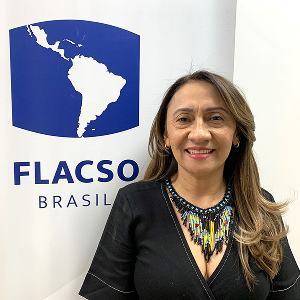
Rita Gomes do Nascimento (Rita Potyguara)
Coordenadora Acadêmica

Ana Paula da Silva
Coordenador de Administração e Finanças
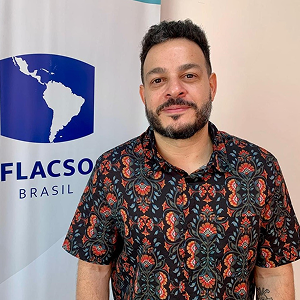
João Paulo Gurgel
Secretaria Acadêmica

Marcelle Tenorio
Assessoria de Cooperação Internacional
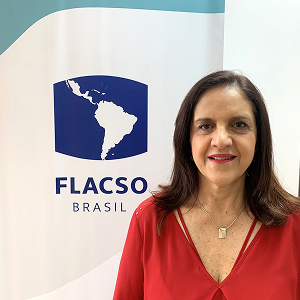
Ivana de Siqueira
Assessoria de Comunicação
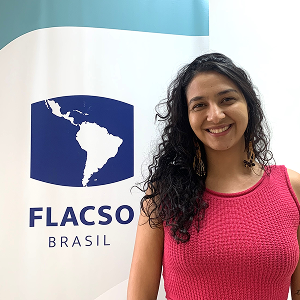
Nayá Tawane
Assessoria de Comunicação
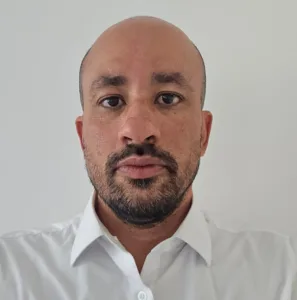
Rafael Pereira